


What Should You Know About Fire Fighting Steel Pipe Standards and Applications
2026-11-06
What Should You Know About Fire Fighting Steel Pipe Standards and Applications
Fire protection systems need pipework that delivers required water flow and pressure. Each section must meet the design and applicable codes.
Choosing the right fire fighting steel pipe involves more than selecting a diameter. Buyers should consider the standard, grade, wall thickness, connections, and corrosion protection.
What Standards Apply to Fire Fighting Steel Pipe?
The required pipe standard depends on the project specification and intended application. ASTM A795 specifically covers steel pipe for fire protection, while ASTM A53 pipe is a general-purpose carbon steel pipe that may be specified for fire protection when permitted by the design and applicable codes.
ASTM A795 for Fire Protection Pipe
ASTM A795 covers black and hot-dipped, zinc-coated (galvanized), welded and seamless steel pipe intended for fire protection systems. It is therefore an important specification when sourcing fire fighting steel pipe for sprinkler and other fire protection applications.
Buyers should confirm grade, size, wall thickness, coating, end finish, and inspection requirements against the project documents.
ASTM A795 clarifies product requirements, but suitability also depends on design pressure, installation method, and applicable fire codes.
ASTM A53 Pipe for Fire Protection Projects
ASTM A53 pipe covers black and hot-dipped galvanized, welded and seamless carbon steel pipe. It is widely used in industrial, mechanical, and fluid transportation applications, and may also be selected for fire protection projects when allowed by the approved design.
ASTM A53 specifies pipe types, grades, dimensions, chemical composition, mechanical properties, and testing. A higher schedule generally means a thicker wall for the same nominal size; check actual dimensions against the relevant tables.
For fire protection, verify grade, wall thickness, pressure, and connection details; the ASTM designation alone does not determine suitability.
Where Is Fire Fighting Steel Pipe Used?
Pipe diameter and wall thickness depend on system layout, required flow, pressure, and hydraulic calculations. Correctly specified fire fighting steel pipe delivers water from its source to the points of use.
Fire Main and Fire Pump Pipe
Fire main pipe distributes water from a tank or municipal supply to the network. Fire pump pipe connects the pump with its suction and discharge lines; both are sized for required flow and pressure.
Fire Standpipe
Standpipe systems provide water connections for firefighters inside or around buildings. Selection must account for pressure and local fire codes.
Fire Sprinkler Branch Pipe
Sprinkler branch pipes distribute water from the main network to sprinkler heads. ASTM A795 is a key specification to consider, subject to project requirements and local approvals.
How Are Fire Fighting Steel Pipes Connected?
Common connections include welding, threading, and grooved mechanical couplings.
Welded Connections
Welding creates a permanent joint when performed by qualified personnel under an approved procedure.
Threaded Connections
Threaded connections are often used for smaller-diameter pipe. The pipe ends connect with compatible fittings. Confirm that wall thickness and thread type are permitted, since threading removes material from the pipe wall.
Grooved Connections
Grooved couplings can simplify installation and maintenance. A groove is formed or cut near the pipe end, and a mechanical coupling with a gasket joins the pipes. Roll and cut grooving have different dimensional and wall-thickness limitations. All components must be compatible and approved for the system.
Installers should follow the approved design and the fitting or coupling manufacturer's instructions.
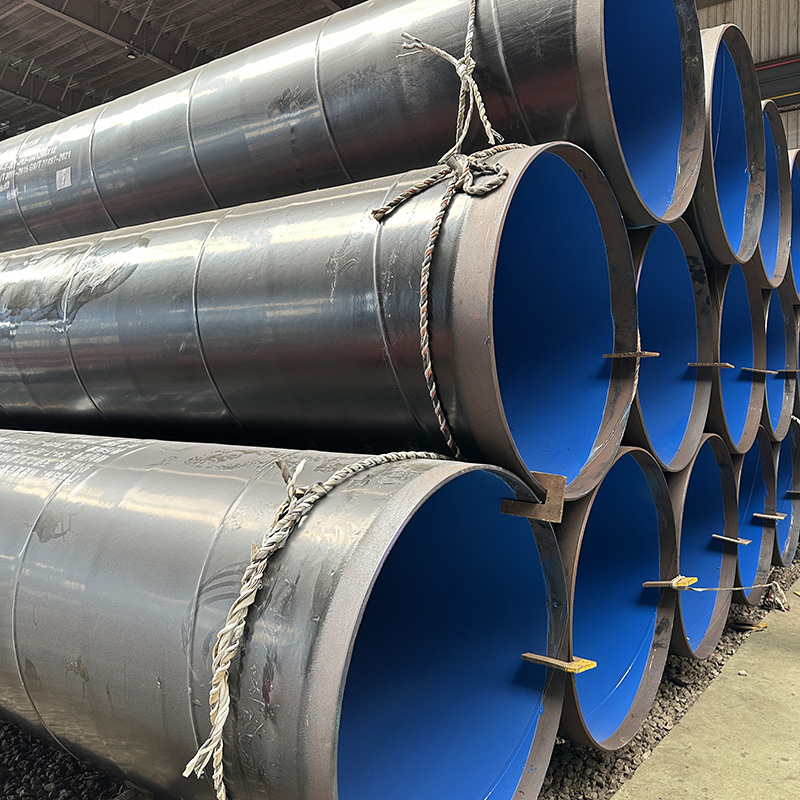
How Can Fire Fighting Steel Pipe Be Protected Against Corrosion?
Choose corrosion protection according to the installation environment, water conditions, and project specification.
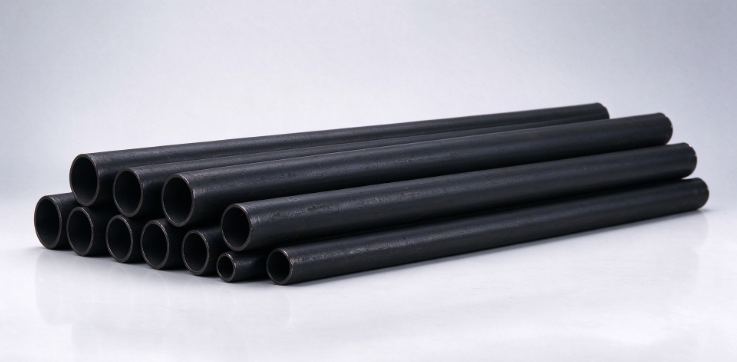
Black Steel Pipe