


What Are FBE Coated Steel Pipes and Where Are They Used
2026-11-05
What Are FBE Coated Steel Pipes and Where Are They Used
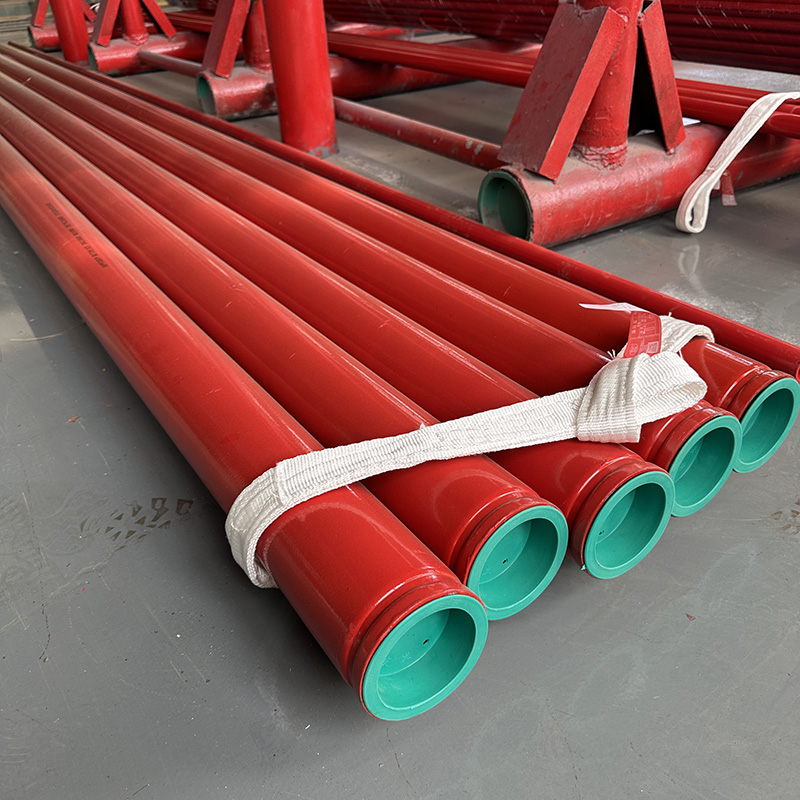
Steel pipes used in oil and gas, water supply, and industrial systems can face corrosion from moisture, soil, salts, and chemicals. Corrosion may weaken pipe walls, cause leakage, and increase maintenance costs. Fusion bonded epoxy coating is widely used to protect steel pipelines, particularly those installed underground or underwater.
What is fusion bonded epoxy, how is FBE coating applied, and when is an FBE coated pipe needed? The following guide explains its basic process, benefits, limitations, and common applications.
What Is Fusion Bonded Epoxy Coating?
Fusion bonded epoxy (FBE) is a thermosetting powder coating applied to a prepared, heated steel surface. The powder melts, flows over the steel, and cures through a chemical reaction, forming a continuous protective film.
The coating acts as a barrier against moisture, oxygen, salts, and other corrosive substances. It is commonly used on the external surfaces of buried and submerged pipelines. Special formulations can also be used internally when required by the service conditions.
How Does the FBE Coating Process Work?
The performance of FBE coating relies on proper surface preparation and controlled application. The main stages are:
Surface preparation: Oil, grease, dust, rust, and mill scale are removed. Abrasive blasting creates the cleanliness and surface profile required by the coating specification. Poor preparation can reduce adhesion and cause early failure.
Preheating: The cleaned pipe is heated to the temperature recommended for the epoxy powder. Induction heating is commonly used on pipeline coating lines. This allows the powder to melt and flow.
Powder application: Electrostatic equipment sprays charged epoxy powder onto the heated pipe. The powder melts on contact and forms a continuous layer. Application is controlled to achieve uniform coverage.
Curing and inspection: The epoxy cures into a solid film. The pipe is cooled and inspected.
What Are the Advantages of FBE Coating?
Corrosion resistance: Fusion bonded epoxy coating separates steel from moisture, oxygen, salts, and soil contaminants, helping reduce corrosion on buried and submerged pipelines.
Strong adhesion: Proper surface preparation and application help FBE bond firmly to steel.
Chemical resistance: FBE resists many industrial chemicals, but suitability depends on the chemical and service conditions.
Cathodic protection compatibility: External pipeline coatings are often combined with cathodic protection. Cathodic protection provides supplementary protection at coating defects.
When Do Steel Pipes Need FBE Coating?
Selection depends on the environment and project requirements. An FBE coated pipe is commonly considered when external corrosion protection is important.
- Underground pipelines: Soil moisture, salts, and changing soil conditions can corrode buried steel. An external fusion bonded epoxy coating helps isolate the pipe from these elements.
- Oil and gas pipelines: FBE is one option for external corrosion protection on long-distance pipelines and is often used with cathodic protection.
- Water and wastewater systems: FBE can protect the external surface of buried pipes. Internal coatings must be suitable for the transported water or wastewater and meet applicable requirements.
- Marine and industrial environments: Seawater, chemicals, and moisture can accelerate corrosion. FBE may be specified for qualified applications, while severe impact or abrasion risks may require additional protection.
What Are the Limitations of FBE Coating?
Although FBE coating provides corrosion protection, it is not suitable for every condition.