Understanding Black Steel Pipe: Features, Uses, and Benefits
2025-04-18
Understanding Black Steel Pipe: Features, Uses, and Benefits
Steel pipes are renowned for their strength and longevity, offering reliable solutions for various piping needs. Among the different types of steel pipes, black steel pipe stands out as a popular choice for both residential and commercial applications. Known for its durability, black steel pipe offers distinct benefits, but it also comes with certain limitations. In this article, we'll explore what black steel pipe is, along with its advantages and potential drawbacks.
What Is Black Steel Pipe?
Black steel pipe is a widely used piping material in both residential and commercial systems. Manufactured from hot-rolled or cold-rolled steel, this type of pipe features a dark-colored surface coating formed during the manufacturing process, which offers moderate resistance to rust and corrosion. One of the key benefits of black steel pipe lies in its impressive strength—it's highly durable and resistant to cracking, bending, or breaking, even under high pressure or heavy loads.
Because of its robust structure, black steel pipe for water and black steel pipe for gas line applications has become increasingly common. It is often chosen over plastic alternatives like PVC due to its ability to withstand demanding conditions. However, while its composition makes it ideal for certain uses, it may not be suitable for every situation. If you're planning to use black steel pipes in a project, it's important to understand their properties, strengths, and limitations.

How Is Black Steel Pipe Different from Galvanized Pipe?
Although black steel pipe and galvanized pipe are both made of steel, they differ significantly in surface treatment and typical applications—often leading to confusion. Galvanized pipes are coated with a layer of zinc, which enhances their resistance to rust and corrosion. This added protection also contributes to their higher cost. In contrast, black steel pipes lack any coating, not even paint. The dark appearance comes from a thin layer of iron oxide formed during manufacturing.
When it comes to usage, black steel pipe for gas line remains a popular choice due to its strength and reliability. While it was once common in water supply systems, the rise of alternatives like PVC has made black steel pipe for water less prevalent, with its primary role shifting toward gas transportation in both residential and industrial settings.
Does Black Steel Pipe Rust?
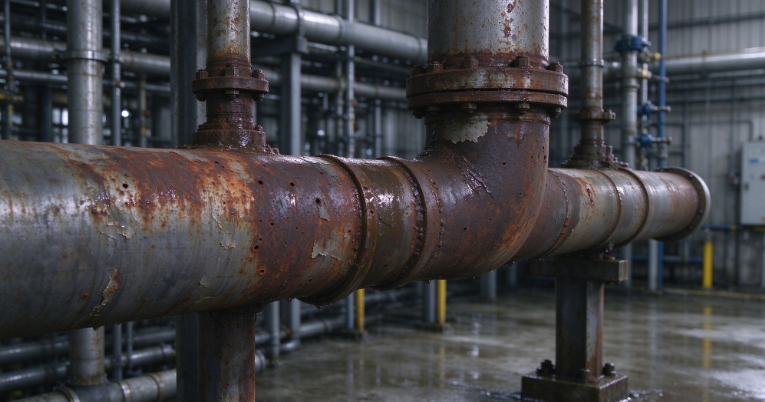
Unlike galvanized pipes, black steel pipe does not have a corrosion-resistant coating. As a result, when exposed to moisture or water over time, it is prone to rusting. This is especially true in humid environments or outdoor installations. While black steel pipes are known for their strength and durability, they are not inherently rust-proof.
To enhance corrosion resistance, many users apply an external protective coating—painting being one of the simplest and most cost-effective methods. With proper maintenance and protection, black steel pipe for gas line and other applications can still perform reliably for years.
Does Black Steel Pipe for Water Work in Potable Water Systems?
While black steel pipe for water is used in various non-potable systems, it is not recommended for carrying drinking water. One major reason is that black steel pipe lacks any internal or external protective coating. When exposed to water over time—especially in systems where oxygen is present—corrosion can occur. As rust forms inside the pipe, it may contaminate the water flowing through it, making it unsafe for human consumption.
Due to this risk, black steel pipes are typically avoided in potable water systems. Instead, they are better suited for closed-loop systems where water recirculates, such as in hydronic heating or steam systems. In these setups, the lack of constant oxygen exposure minimizes the chances of rust development.
Though black steel pipe for water may still be seen in some older infrastructure, modern plumbing standards recommend using more corrosion-resistant materials, especially in systems involving drinking water. If you're considering black steel pipe for a project, it's essential to evaluate whether the application involves prolonged water exposure and whether water quality could be affected.
For applications like black steel pipe for gas line or sealed heating systems, however, it remains a durable and reliable option.