The Complete Guide to Grooved Pipe Fittings for Piping Systems
2025-04-09
The Complete Guide to Grooved Pipe Fittings for Piping Systems
What Are Grooved Pipe Fittings?
Grooved pipe fittings, also known as clamp-type fittings, are a key component in modern piping systems. According to the design standards for automatic sprinkler systems, pipelines should be connected using grooved fittings, threaded joints, or flanges. For pipes with a diameter of 100mm or more, it is recommended to use grooved fittings or flanged connections.
This grooved connection method—often referred to as grooved pipe connection technology—has become a preferred solution for transporting liquids and gases. Thanks to its efficient and reliable design, it has rapidly gained popularity in the industry, gradually replacing traditional flange and welding methods.
The adoption of grooved fittings significantly simplifies the pipe installation process. It transforms complicated assembly into a fast, safe, and easy task, marking a major advancement in piping system technology.


Introduction to Grooved Pipe Fittings
Grooved pipe fittings can be broadly categorized into two main types:
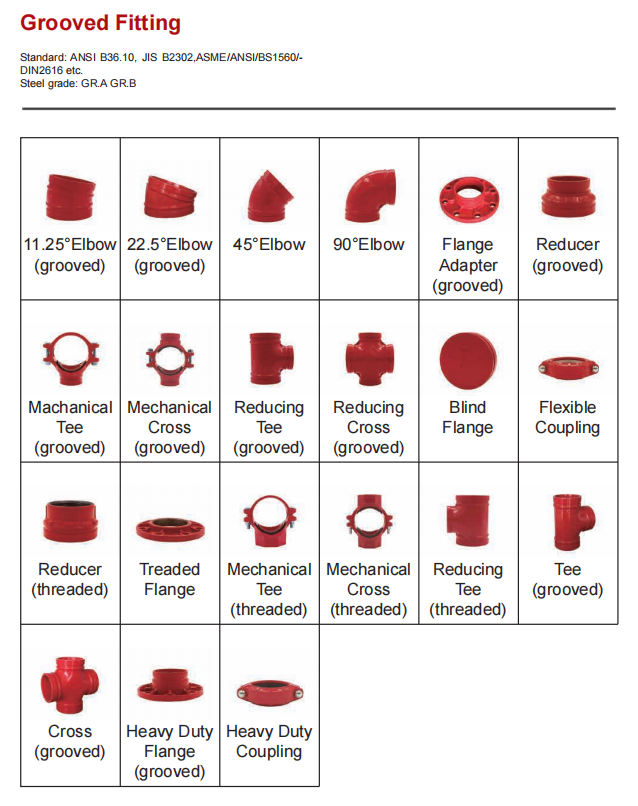
Fittings for Connection and Sealing: These include grooved rigid couplings, grooved flexible couplings, mechanical tees, and groove flanges.
Fittings for Connection and Transition: These include elbows, tees, crosses, reducers, end caps, and more.
The grooved pipe fittings designed for both connection and sealing typically consist of three essential components: a sealing rubber ring, a clamp, and locking bolts. The rubber sealing ring, positioned on the inner layer, is placed around the pipe's outer surface, aligning with the pre-rolled groove. A clamp is then positioned over the rubber ring and fastened securely with two bolts.
Thanks to the unique design of the rubber sealing ring and clamp, grooved connections offer exceptional sealing performance. As the fluid pressure within the pipe increases, the sealing ability of the connection is further enhanced, ensuring long-term reliability.
For more specifications information about groove fittings, please click here to view:grooved pipe fittings manufacturers , grooved fitting , grooved fittings for fire fighting system - Tianjin Youfa Steel Pipe
The Advantages and Disadvantages of Grooved Pipe Fittings
Advantages of Grooved Fittings
Simplified Installation: Grooved fittings are designed for easy installation, eliminating the need for welding, threading, or flanges. This straightforward process not only saves time but also reduces installation costs, making them a preferred choice for a variety of piping applications.
Wide Compatibility: These fittings are highly adaptable, allowing them to connect pipes made from materials like steel, PVC, copper, and ductile iron. Their flexibility makes them ideal for diverse piping systems with different material requirements.
Exceptional Pressure Resistance: Built to withstand high-pressure systems, grooved fittings offer pressure ratings as high as 1000 psi. Their durability makes them perfect for industrial applications where reliable pressure handling is crucial.
Low Maintenance Needs: Grooved fittings require minimal maintenance, as there are no components like bolts or gaskets that need frequent attention. This feature translates into significant long-term savings in both time and operational costs.
Fire Safety Benefits: Grooved fittings are widely used in fire protection systems. Their robust sealing capabilities and resistance to extreme temperatures and pressures ensure that they perform reliably when safety is at stake.
Easy to Maintain: Grooved fittings are designed for easy disassembly and reassembly, which makes them a go-to solution for systems that require regular checks or maintenance. Their user-friendly nature ensures quick and hassle-free maintenance.
Disadvantages of Grooved Fittings
Higher Initial Cost: While grooved fittings offer numerous advantages, they come with a higher upfront cost compared to traditional flange or welded fittings. However, the reduction in labor costs and long-term maintenance savings often make them a cost-effective solution over time.
Limited Flexibility: Grooved fittings create a secure and rigid connection, which may limit the movement of pipes. This could pose challenges in systems that require pipe expansion or flexible connections due to temperature variations or system vibrations.
Material Limitations: Grooved fittings may not be suitable for all types of materials, particularly in systems exposed to abrasive or highly corrosive substances. Incompatible materials can lead to wear and damage to the fitting components, requiring more frequent replacements.
Potential for Groove Damage: Improper installation can result in damage to the grooves, which may cause leaks or performance issues. Careful installation, including proper alignment and secure tightening, is essential to ensure the fittings remain in optimal working condition.