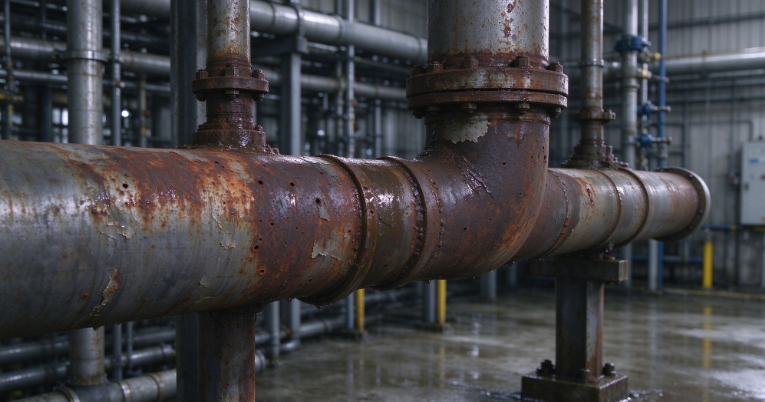
Seamless Pipe Welding Process A Practical Guide for Seamless Steel Pipe
2025-12-25
Seamless Pipe Welding Process A Practical Guide for Seamless Steel Pipe
What Preparation Is Needed Before the Seamless Pipe Welding Process?
Before starting the seamless pipe welding process, proper preparation is essential, especially when working with carbon steel seamless pipe. Any oil, rust, or surface contaminants should be thoroughly removed to ensure a clean welding area and a strong weld joint. Neglecting surface cleaning often leads to defects such as porosity or weak weld seams.
In addition, it is important to verify that the dimensions and specifications of the seamless steel pipe meet project requirements. Mismatched pipe sizes or inconsistent wall thickness can cause alignment issues and negatively affect welding quality. For specialized applications like hydraulic tubing or boiler systems, stricter control over dimensional accuracy and material properties is required to meet performance and safety standards.

How to Choose the Right Method in the Seamless Pipe Welding Process?
Choosing the right welding technique is a key step in achieving a reliable seamless pipe welding process. Factors such as material grade, pipe wall thickness, and service conditions should all be considered. Common welding methods for carbon steel seamless pipe include manual arc welding, submerged arc welding, gas shielded welding, and argon arc welding, each with its own advantages and limitations.
1. Manual Arc Welding
Manual arc welding is widely used due to its flexibility and simple operation. The heat generated by the electric arc melts both the electrode and the seamless steel pipe, forming a solid joint. This method is suitable for small-scale projects, repair work, and welding in various positions, such as pup joints or valve connections. However, weld quality largely depends on the skill and experience of the welder.
2. Submerged Arc Welding
Submerged arc welding uses a continuous welding wire and performs the welding process beneath a protective flux layer. This method offers high efficiency, stable weld quality, and minimal deformation. It is commonly applied in large-scale production, such as manufacturing heat exchanger tubes or large structural components made from carbon steel seamless pipe. The downside is that the equipment setup is more complex and less flexible.
3. Gas Shielded Welding
Gas shielded welding, including CO₂ welding, uses shielding gas to protect the weld pool from atmospheric contamination. This technique allows for fast welding speed, smooth weld appearance, and reduced spatter. However, it requires a controlled environment, as airflow or gas mixing can affect weld integrity. It is often chosen when higher weld quality is required for seamless steel pipe applications.
4. Argon Arc Welding
Argon arc welding employs pure argon gas as the shielding medium, effectively preventing oxidation and nitridation during the seamless pipe welding process. This method delivers excellent weld quality and is commonly used in industries such as chemical processing and petroleum, where welding reliability is critical. Although the results are superior, the overall cost is relatively high.
What Are the Key Welding Operation Steps in the Seamless Pipe Welding Process?
Beveling
Before welding, a suitable bevel should be prepared based on pipe wall thickness and welding method. Proper beveling helps achieve full penetration and improves weld formation.
Pipe Alignment and Fixing
The two carbon steel seamless pipe sections should be accurately aligned and secured using clamps or fixtures to prevent movement or misalignment during welding.
Preheating and Controlled Cooling
For thick-walled pipes or high-energy welding methods, preheating can help reduce residual stress and minimize the risk of cracking. Controlled cooling after welding further improves weld stability.
Welding Execution
Carry out welding according to the selected process parameters, carefully controlling current, voltage, and welding speed to maintain consistent weld quality.
Post-Weld Cleaning and Inspection
Once welding is complete, remove slag and surface impurities. Visual inspection and non-destructive testing, such as X-ray examination, should be conducted to confirm that the weld meets quality requirements.