How Hot Rolled Steel Pipe Differs from Cold Rolled Steel Pipe
2025-10-22
How Hot Rolled Steel Pipe Differs from Cold Rolled Steel Pipe
Steel pipes are a fundamental part of modern construction, industrial machinery, and mechanical systems. Choosing the right type of steel pipe is crucial for ensuring durability, strength, and cost efficiency. Among the most common options are hot rolled steel pipe and cold rolled steel pipe, each with unique characteristics, advantages, and applications. Understanding their differences can help you make an informed decision for your projects.
What Is Hot Rolled Steel Pipe
Hot rolled steel pipe is produced by rolling steel at high temperatures, usually above 1700°F (927°C). This high-temperature process makes the steel malleable, allowing it to be formed into pipes of various diameters and lengths efficiently.
Mechanical Properties: Hot rolled steel pipes have good ductility and toughness due to the high-temperature processing, which relieves internal stresses. They are less brittle and can withstand heavy loads, making them ideal for structural applications.
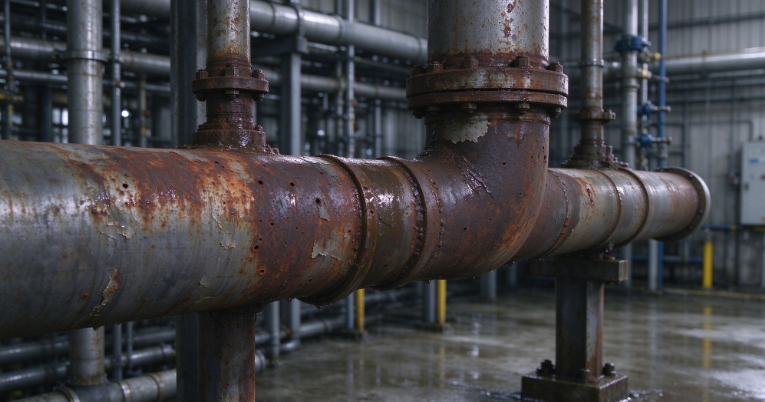
Surface Characteristics: The hot rolling process often leaves a rough surface with some oxidation or scale. While not a problem for most construction uses, additional surface finishing may be needed for applications requiring aesthetics or precision.
Dimensional Accuracy: Hot rolled steel pipes typically have looser tolerances compared to cold rolled pipes, but this is acceptable for general construction, scaffolding, and pipeline systems.
Applications: Commonly used in construction, scaffolding, large pipelines, and other industrial infrastructure where high strength and durability are critical, and surface finish is less important.
What Is Cold Rolled Steel Pipe
Cold rolled steel pipe starts as hot rolled steel, which is then processed further at room temperature through cold rolling, drawing, or precision finishing. This process enhances the pipe’s mechanical properties and surface quality.
Mechanical Properties: Cold rolled steel pipes have higher tensile strength and hardness due to work hardening during cold processing. They are excellent for applications where strength and rigidity are essential.
Surface Quality: Cold rolling produces a smooth, bright surface that often requires no additional finishing, making it ideal for exposed architectural applications or equipment where aesthetics matter.
Dimensional Accuracy: Cold rolled steel pipes are highly precise in size and shape, with tight tolerances suitable for precision engineering, automotive, and industrial machinery.
Applications: Frequently used in mechanical components, automotive frames, precision piping systems, and decorative construction where exact dimensions and smooth surfaces are necessary.
What Is Key Differences Between Hot Rolled Steel Pipe and Cold Rolled Steel Pipe
| Feature | Hot Rolled Steel Pipe | Cold Rolled Steel Pipe |
|---|---|---|
| Manufacturing Temperature | High temperature (>1700°F) | Room temperature (cold processed) |
| Surface Finish | Rough, may need additional treatment | Smooth, high-quality finish |
| Dimensional Accuracy | Lower | Higher |
| Strength and Hardness | Moderate | Higher |
| Typical Applications | Construction, pipelines, scaffolding | Precision machinery, automotive, architectural pipes |
How to Selecting the Right Steel Pipe
Choosing the appropriate steel pipe depends on your project requirements:
Hot Rolled Steel Pipe is suitable for structural frameworks, scaffolding, pipelines, and applications where strength, ductility, and cost-efficiency are key considerations.
Cold Rolled Steel Pipe is recommended for applications demanding precise dimensions, higher strength, smooth surface finish, and mechanical performance.
Both types of pipes serve essential roles across various industries, and understanding their properties ensures optimal performance and longevity.