Everything You Need to Know About Spiral Welded Steel Pipes
2025-02-18
Everything You Need to Know About Spiral Welded Steel Pipes
1. What is Spiral Welded Steel Pipe?
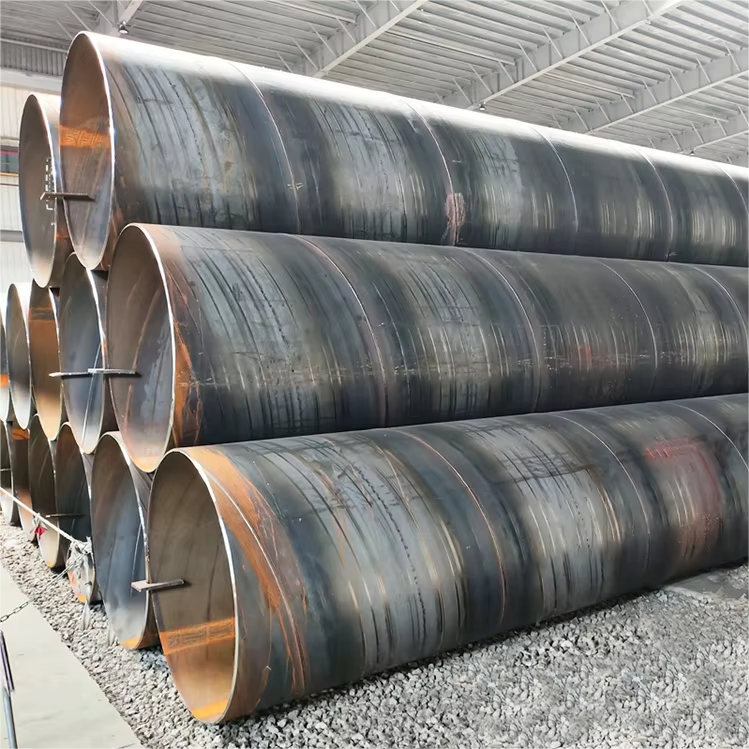
A spiral welded steel pipe is a type of steel pipe made by spirally welding a flat steel strip. The manufacturing process involves winding the strip into a spiral shape, with the edges being welded together to form the pipe. This unique welding technique sets spiral welded steel pipes apart from other types of welded pipes, such as longitudinal welded pipes, which are welded along a straight seam.
The spiral welding process allows for the creation of large diameter pipes, which are ideal for high-strength applications. The helical structure not only enhances the pipe's strength but also makes it more resistant to external forces, making it a preferred choice in various industries.

2. The Production Process of Spiral Welded Steel Pipe
The production of a spiral welded steel pipe follows a series of steps that are similar to the production of other welded pipes. Initially, a round steel billet is transformed into a flat steel plate. This flat steel plate is then rolled into coils, which are unwound during the production process.
Once the coils are unwound, they are flattened and passed through angled rollers. These rollers shape the steel into a cylinder, forming the desired diameter of the pipe. This step is crucial in ensuring the uniformity and strength of the pipe's structure.
Next, the edges of the steel strip are welded together using methods such as Submerged Arc Welding (SAW). Both the interior and exterior of the spiral seam are welded to ensure a secure and durable bond. At the end of each coil, a new coil is added and butt-welded to the trailing edge of the pipe, creating a cross seam.
Finally, the spiral welded steel pipe is cut to the required length. The ends of the pipe are often beveled to facilitate easier connection with other pipes or fittings. This entire process is highly customizable, allowing for the production of spiral welded steel pipes in various diameters and lengths to meet specific project needs.
3. Advantages and Disadvantages of Spiral Welded Steel Pipe
Advantages of Spiral Welded Steel Pipe:
Versatility in Production: One of the key benefits of spiral welded steel pipe is its ability to produce various diameters using the same width of steel strip. By adjusting the forming angle, manufacturers can easily switch between different pipe sizes without changing the strip width, making it highly versatile for different applications.
Unlimited Lengths: Since the pipe is produced through continuous bending, the length of the spiral pipe is not restricted. The production process allows for pipes to be manufactured in virtually any length, providing flexibility for large-scale projects that require long pipes.
Uniform Spiral Weld: The welding seam of the spiral welded steel pipe is evenly distributed around the circumference of the pipe, which contributes to its high precision and strong structural integrity. This even distribution of the weld ensures a higher level of strength and durability.
Adaptability for Small Batches: The spiral welding process is highly adaptable, allowing for the production of smaller quantities and a greater variety of sizes, which is beneficial for industries with varying demands.
Disadvantages of Spiral Welded Steel Pipe:
One of the drawbacks of spiral welded steel pipe is related to the raw material used in its production. Since coiled strip steel is employed, there is often a slight crescent-shaped bend in the material. This curvature, combined with the fact that the welding point is located at the edge of the strip steel, introduces some elasticity. As a result, it becomes challenging to properly align the welding torch during the welding process, which can negatively impact the welding quality.
To address this issue, advanced seam tracking and quality inspection equipment must be implemented to ensure that the welds meet the required standards. This additional complexity can increase the cost and time involved in producing spiral welded steel pipes.