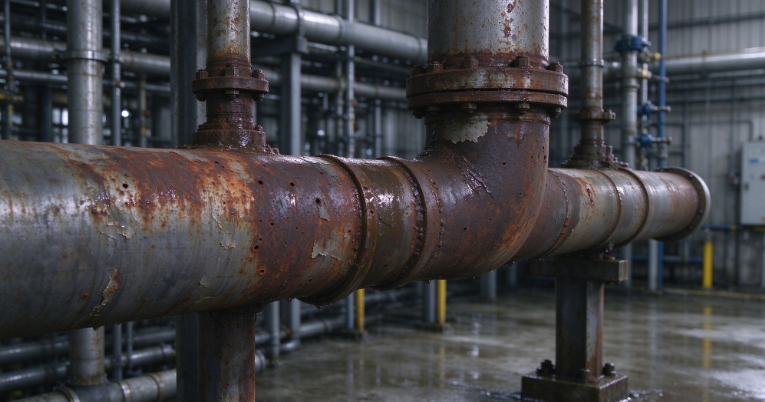
ERW Pipe Thickness Thin Wall vs Thick Wall Comparison
2025-12-31
ERW Pipe Thickness Thin Wall vs Thick Wall Comparison
What is an ERW Pipe?
ERW pipe (Electric Resistance Welded pipe) is a type of steel pipe made by welding steel strips together using electric resistance. It is widely used in construction, mechanical components, and fluid transportation systems. Choosing the right erw pipe thickness is crucial because it directly affects performance, cost, and durability. For carbon steel erw, thickness selection also influences welding quality and structural strength.
What Does ERW Pipe Thickness Mean?
Choosing the wall thickness of ERW pipes is far more complex than simply "thicker is stronger." It involves a comprehensive trade-off between cost, performance, manufacturing process, and end application. The most suitable erw pipe thickness is the most economical thickness while meeting all performance and safety requirements. There is no absolute superiority or inferiority between thin and thick walls, only suitability.
ERW pipe thickness refers to the wall thickness of the pipe relative to its outer diameter. In the industry, pipes are generally classified as thin-walled or thick-walled using the diameter-to-thickness ratio (D/t):
- Thin-walled ERW pipe: D/t ≥ 40. These pipes have a smaller wall thickness relative to the diameter. Examples include Φ48mm1.5mm or Φ114mm2.5mm.
- Thick-walled ERW pipe: D/t ≤ 20. These pipes have a larger wall thickness relative to the diameter, such as Φ60mm5.0mm or Φ219mm16mm.
- Medium-thick pipes fall in between and can be considered based on specific application needs.
Choosing the right erw pipe thickness is about balancing performance, cost, and manufacturability.

What Are the Characteristics of Thin-Walled and Thick-Walled ERW Pipes?
Thin-Walled ERW Pipes
- Less material usage, lower cost
- Lighter weight, lower structural stability
- Lower pressure resistance, prone to deformation during welding and forming
- Requires precise control in manufacturing
Applications: Lightweight structures, furniture, ventilation ducts, low-pressure fluid transport.
Processing: Suitable for cold bending, but welding must be carefully controlled.
Thick-Walled ERW Pipes
- Higher material cost due to more steel usage
- Heavier, higher structural stability and rigidity
- High pressure resistance and bending strength
- Forming and welding require more power; cutting and drilling are more difficult
Applications: High-pressure pipelines, heavy structures, mechanical components, wear-resistant systems.
Processing: Reliable connections (welding, flanges), but cold bending and drilling are challenging.
How to Choose ERW Pipe Thickness for Different Applications?
For Fluid Transportation Pipelines
- Thin-walled pipes: Low-pressure air, water, and cable conduits (e.g., building water supply, fire sprinkler branches).
- Thick-walled pipes: High-pressure steam, oil, or chemical media; follow design standards like ASME B31.1 for pressure calculations.
For Structural Applications
- Thin-walled pipes: Light loads, primarily tension, like display racks or interior decorative frames.
- Thick-walled pipes: Heavy loads, bending, or torsion, such as building columns, equipment frames, and automotive shafts.
For Mechanical Components
- Thin-walled pipes: Weight-sensitive components requiring cold bending, like bicycle frames.
- Thick-walled pipes: Wear-resistant or precision-machined components, like shafts or guide rails.