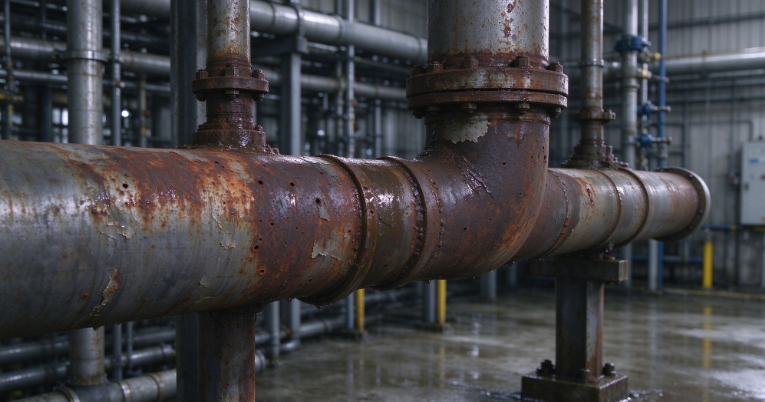
Do Seamless Steel Pipes Need Galvanizing in Corrosive Environments
2026-04-30
Do Seamless Steel Pipes Need Galvanizing in Corrosive Environments
Whether seamless steel pipes (especially carbon steel and low-alloy steel) need galvanizing mainly depends on their service environment, corrosion exposure level, and required service life. In many engineering applications, galvanizing is considered a practical and cost-effective method for improving long-term durability. In other words, the question of do seamless pipes need galvanizing is not a fixed answer, but a decision based on operating conditions and project requirements.
What Is a Galvanized Seamless Steel Pipe?
A galvanized seamless steel pipe refers to a seamless steel pipe whose surface has been coated with a layer of zinc to enhance its corrosion resistance. This zinc coating acts as a protective barrier between the steel substrate and the external environment, significantly slowing down oxidation and rust formation.
More importantly, zinc provides sacrificial anodic protection. Even if the coating is scratched or partially damaged, the zinc layer will corrode preferentially to the steel underneath. This electrochemical property ensures continuous protection of the base material, which is a key reason why galvanizing is widely used in seamless steel pipe corrosion protection systems.
Do Seamless Steel Pipes Have Any Inherent Corrosion Resistance?
High-quality steel, especially carbon steel and low-alloy seamless steel pipes, does possess a certain degree of inherent corrosion resistance. This comes from controlled alloy composition and manufacturing processes, allowing the material to perform adequately in relatively mild service conditions.
However, this natural resistance is limited and cannot be relied on as a long-term corrosion protection solution. In real engineering environments, factors such as humidity, soil composition, temperature variation, and environmental pH can significantly affect performance. Therefore, when evaluating do seamless pipes need galvanizing, the operating environment must always be considered as the primary decision factor.
When Is Galvanizing for Seamless Steel Pipes Necessary or Strongly Recommended?
Galvanizing becomes an essential method of seamless steel pipe corrosion protection when carbon steel seamless pipes are exposed to humid, outdoor, or mildly corrosive environments. In such conditions, a galvanized seamless steel pipe provides significantly improved durability and service life.
Outdoor and humid environment applications
Galvanizing is widely applied in environments with high humidity or direct outdoor exposure, where corrosion risk is significantly increased. Typical applications include:
- Municipal engineering systems such as water supply and drainage pipelines, gas transmission pipelines, traffic infrastructure, and utility poles
- Building structures including scaffolding systems, steel supports, outdoor railings, and roof drainage pipelines
- Agricultural facilities such as greenhouse frameworks, irrigation pipelines, and livestock enclosures exposed to weather conditions
Industrial applications
In industrial environments, galvanizing is often required or strongly recommended due to the presence of moisture, gases, or mildly corrosive media.
Typical applications include:
- Auxiliary pipelines in chemical and mining industries exposed to acidic or alkaline atmospheres
- Industrial water and gas transmission systems where media are not highly corrosive but long-term stability is required
In these cases, a galvanized seamless steel pipe provides a cost-effective and reliable corrosion protection solution.
Fire protection and utility systems
Fire protection pipelines are one of the most common applications requiring surface protection treatment. Both internal and external surfaces are typically treated to ensure long-term reliability and compliance with safety standards.
In addition, domestic water supply systems, heating pipelines, and some low-pressure gas pipelines may also require protective treatment depending on service conditions.
Service life performance under protection
Hot-dip galvanized seamless steel pipes typically offer a service life that is 3–5 times longer than uncoated carbon steel pipes under similar environmental conditions.
This improvement is mainly due to the zinc coating acting as a sacrificial anode, meaning it corrodes preferentially and continuously protects the underlying steel substrate even when minor surface damage occurs.
When Can Galvanizing Be Omitted?
In some engineering scenarios, surface galvanizing may not be necessary, and alternative protection methods can be used instead:
- Dry indoor environments, such as structural supports, equipment brackets, and non-water-related piping systems
- Transport of non-corrosive media, such as lubricating oil or hydraulic systems where the medium itself provides protection
- Systems already protected by coatings such as epoxy resin, polyethylene, or other anti-corrosion linings
- High-temperature or high-pressure environments where protective zinc coatings may degrade or lose effectiveness
- Strong chemical environments involving highly acidic or alkaline media
- Temporary or short-term engineering projects where long service life is not required