Common Limitations and Practical Mitigation Strategies of Carbon Steel Pipe
2026-05-11
Common Limitations and Practical Mitigation Strategies of Carbon Steel Pipe
Carbon steel pipe remains one of the most versatile materials for industrial piping systems and structural engineering worldwide. Thanks to solid mechanical strength, affordable cost and good machinability, it dominates countless fluid transportation, construction and mechanical engineering projects. Even so, users cannot overlook the inherent disadvantages of carbon steel pipe, and understanding the core disadvantages of steel pipes is essential for proper material selection, project design and long-term safe operation. Below we reorganize and elaborate on the inherent limitations of carbon steel pipe in practical application, together with reasonable countermeasures and optimization suggestions.
Corrosion Vulnerability and Rusting Risks
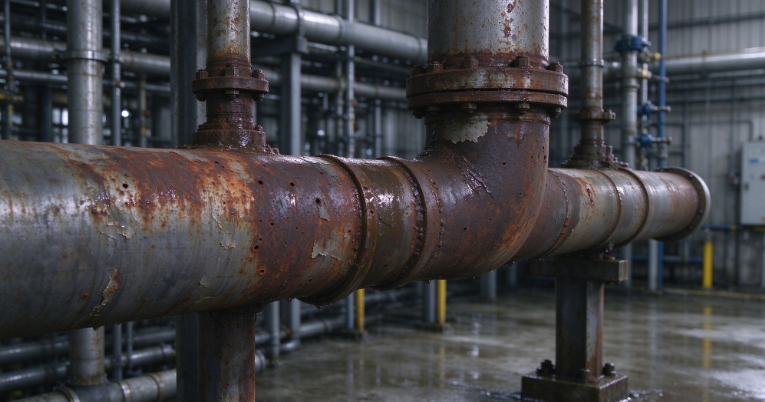
One of the most prominent drawbacks of ordinary carbon steel pipe is its weak natural corrosion resistance. When exposed to humid air, acid-base media or coastal salt spray environments, the pipe surface and inner wall are prone to oxidation and rust erosion.
Continuous corrosion gradually thins the pipe wall, and severe cases will lead to perforation and medium leakage. Not only does this drive up routine maintenance costs, it also brings potential safety hazards to the entire piping system. A typical phenomenon is that many pipelines look intact externally, while serious internal rust has already developed unseen.
To reduce such risks, targeted surface protection is highly recommended. Galvanizing treatment, professional painting or anti-corrosion coating spraying can effectively isolate the steel from corrosive media. Designers should also reserve proper wall thickness allowance to cope with natural corrosion loss. For extremely harsh corrosive working conditions, it is more reliable to replace conventional carbon steel pipe with stainless steel or plastic piping options.
Low-Temperature Brittleness and Operational Safety Risks
Temperature change has a noticeable impact on the mechanical performance of carbon steel pipe. When the ambient temperature drops to an extremely low level around -29℃, ordinary carbon steel material loses toughness and becomes brittle significantly.
Minor surface scratches or hidden welding defects are likely to induce sudden brittle fracture under low temperature, which may cause unexpected engineering accidents. This is a key factor that cannot be ignored for outdoor piping in cold regions or winter construction scenarios.
In low-temperature environments below -20℃, it is necessary to adopt dedicated low-temperature resistant carbon steel pipe grades such as ASTM A333 Gr.6. When sourcing materials from manufacturers, buyers should ask for complete low-temperature impact toughness test reports. Meanwhile, avoid violent knocking, bending and other impact operations during on-site construction in freezing weather, to prevent structural damage to the pipe body.
Constrained Performance Under High-Temperature Working Conditions
carbon steel pipe has obvious limitations in high-temperature service scenarios as well. Ordinary carbon steel can only maintain stable long-term operation within 425℃. Once exceeding this threshold, the overall performance will decline visibly.
High temperature will reduce yield strength and tensile resistance, weakening the pipeline's pressure-bearing capacity greatly. Long-term stress at high temperature also triggers slow plastic deformation of the pipe, and even causes carbon precipitation inside the metal structure, making the pipeline gradually lose its service value.
For high-temperature medium transportation, alloy steel grades like 15CrMo and 12Cr1MoV are more suitable substitutes, and blind cost reduction should be avoided. If short-term over-temperature operation is unavoidable, strengthen regular wall thickness inspection and real-time monitoring of deformation status. Long-term over-limit high-temperature use of standard carbon steel pipe should always be strictly prohibited.