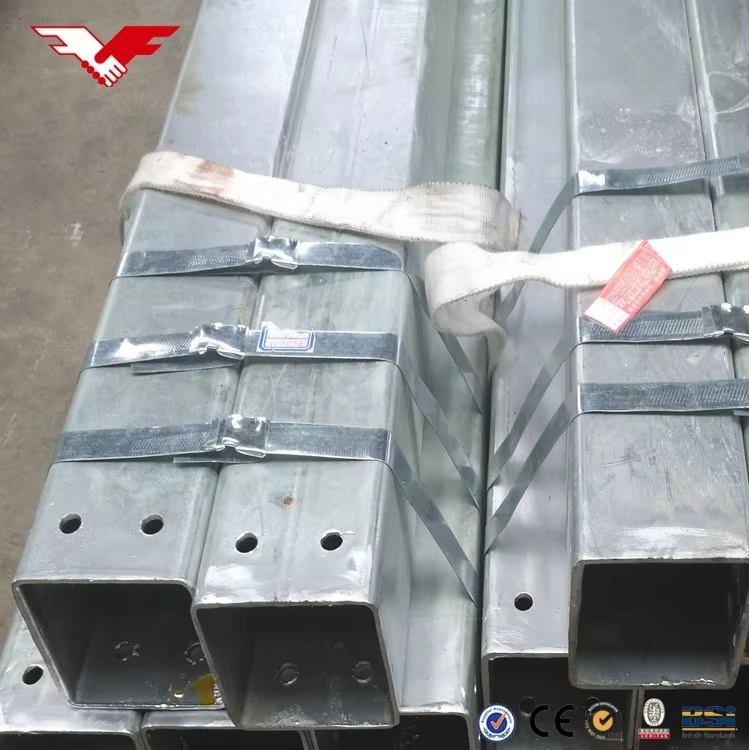
BS1387 Hot Dipped Galvanized Threaded Carbon Steel Pipe Round Tube


BS1387 Hot Dipped Galvanized Threaded Carbon Steel Pipe Round Tube
threaded galvanized steel pipe
0
Day
Threaded steel pipe refers to a type of steel pipe that has threads on either one or both ends. These threads allow the pipe to be easily connected with fittings, such as elbows, couplings, or valves, without the need for welding. Threaded steel pipes are commonly used in plumbing, gas, and water supply systems, as well as in fire protection, heating, and industrial piping.
Quantity

What Is Threaded Galvanized Pipe?
Threaded galvanized pipe is a steel pipe that has been coated with a layer of zinc to protect it from corrosion and is threaded at one or both ends for easy connection with fittings. The zinc coating, applied through a galvanization process, provides added resistance to rust, making the pipe suitable for use in outdoor or wet environments.
Key Features:
Material: Made from steel with a zinc coating to enhance corrosion resistance.
Threading: The pipe ends are threaded following standards like NPT or BSPT, allowing it to be easily connected with threaded fittings.
Galvanization: The zinc coating prevents the steel from rusting, extending the pipe's lifespan, especially in humid or corrosive conditions.
Applications: Commonly used in water supply systems, outdoor piping, gas lines, irrigation, and fire protection systems due to its durability in harsh environments.
Installation: Like regular threaded pipes, they are screwed into matching threaded fittings, creating a sealed connection without the need for welding.
This combination of galvanization and threading makes the pipe especially suitable for use in situations where corrosion resistance and easy installation are essential.
BS1387 Threaded Galvanized Pipe Brief Introduction
| Product | BS1387 Threaded Galvanized Pipe |
| Brand | Youfa Galvanized Steel Pipe Manufacturers |
| Material | Carbon Steel |
| Standard | EN39, BS1139, BS1387, EN10255, GB/T 3091, GB/T 13793 |
| Surface | Zinc Coating 200-500/m2 (30-70um) |
| Ends | BSP Threaded With or Without Caps |
BS1387 Threaded Galvanized Pipe Size Chart
| DN | OD | OD (mm) | BS1387 EN10255 | ||
| LIGHT | MEDIUM | HEAVY | |||
| MM | INCH | MM | (mm) | (mm) | (mm) |
| 15 | 1/2" | 21.3 | 2 | 2.6 | |
| 20 | 3/4" | 26.7 | 2.3 | 2.6 | 3.2 |
| 25 | 1" | 33.4 | 2.6 | 3.2 | 4 |
| 32 | 1-1/4" | 42.2 | 2.6 | 3.2 | 4 |
| 40 | 1-1/2" | 48.3 | 2.9 | 3.2 | 4 |
| 50 | 2" | 60.3 | 2.9 | 3.6 | 4.5 |
| 65 | 2-1/2" | 76 | 3.2 | 3.6 | 4.5 |
| 80 | 3" | 88.9 | 3.2 | 4 | 5 |
| 90 | 3-1/2" | 101.6 | |||
| 100 | 4" | 114.3 | 3.6 | 4.5 | 5.4 |
| 125 | 5" | 141.3 | 5 | 5.4 | |
| 150 | 6" | 165 | 5 | 5.4 | |
| 200 | 8" | 219.1 | |||
| 250 | 10" | 273.1 | |||
BS1387 Threaded Galvanized Pipe Product Show


NPT and BSPT
NPT (National Pipe Thread) and BSPT (British Standard Pipe Thread) are two commonly pipe thread standards.
NPT threads are commonly used in North America, while BSPT threads are more commonly used in Europe and Asia.Both of these standards have tapered threads that can form a tight seal when tightened together. Widely used for connecting pipelines such as water, gas, and oil.
It is important to note that due to the different design and measurement systems of NPT and BSP threads, they are incompatible with each other. Adapters or fittings would be needed to connect NPT and BSP threads.

BS1387 Threaded Galvanized Pipe FAQ
1.Q: What is a threaded galvanized pipe?
A: A threaded galvanized pipe is a steel pipe that has been coated with a layer of zinc to prevent corrosion, with threads cut on each end to allow for connection to fittings or other pipes.
2.Q: What are the common uses of threaded galvanized pipes?
A: Threaded galvanized pipes are commonly used in:
Plumbing systems, especially for water supply lines
Gas distribution
Outdoor applications, like fences and handrails
Industrial and agricultural sectors for fluid transfer
3.Q: What are the benefits of using galvanized pipes?
A: Corrosion resistance: The zinc coating helps protect the steel pipe from rust and corrosion, making it suitable for outdoor and humid environments.
Durability: Galvanized pipes are strong and can last several decades.
Cost-effective: While slightly more expensive than non-galvanized pipes, they offer better longevity.
4.Q: What are the disadvantages of using galvanized pipes?
A: Potential for corrosion over time: Although galvanized pipes resist corrosion, they can eventually corrode from the inside, particularly in water supply systems.
Restricted water flow: Over time, mineral deposits can build up inside, narrowing the pipe and reducing water pressure.
Heavy weight: Galvanized pipes are relatively heavy compared to modern alternatives like PVC or PEX.
5.Q: Can threaded galvanized pipes be used for drinking water?
A: While galvanized pipes were traditionally used for water supply lines, they are no longer recommended for potable (drinking) water systems in many places due to potential lead contamination and the risk of internal corrosion over time. Modern materials like copper, PEX, or PVC are preferred for drinking water.
6.Q: How are threaded galvanized pipes installed?
A: The pipes are screwed into threaded fittings using a pipe wrench. It’s essential to use pipe tape or pipe thread sealant to ensure a watertight seal and prevent leaks.
7.Q: How long do threaded galvanized pipes last?
A: Typically, galvanized pipes last between 40 and 60 years, though this can vary depending on the quality of the water and environment in which they are installed.
8.Q: Can galvanized pipes be welded?
A: Welding galvanized pipes is not recommended due to the toxic fumes released by the zinc coating during the welding process. If welding is necessary, the galvanized coating should be removed from the welding area first, and proper ventilation should be used.
9.Q: How do I maintain galvanized pipes?
A: Routine inspections can help spot potential rust or leaks. If corrosion becomes visible, it's best to replace the affected section of the pipe. For water systems, consider flushing the pipes periodically to remove any mineral buildup.
10.Q: What is the difference between black steel pipes and galvanized pipes?
A: Black steel pipes: Typically used for gas lines and fire sprinkler systems, they are not coated and can corrode over time.
Galvanized pipes: Have a zinc coating, making them more resistant to corrosion, and are more often used for water supply and outdoor applications.