BS JIS Standard Galvanized Scaffolding Clamps and Couplers


BS JIS Standard Galvanized Scaffolding Clamps and Couplers
Clamp and Coupler
FOB, CIF
10tons
tons
Tianjin, China
30Day
Scaffolding clamps, also known as scaffold couplers, are critical components used to connect tubes and fittings within a scaffolding system. These small but powerful connectors play a vital role in maintaining the strength, adaptability, and safety of temporary structures on construction sites. Whether used for vertical standards, horizontal ledgers, or diagonal braces, scaffolding clamps ensure the framework remains stable under dynamic loads and varied site conditions.
Quantity
Scaffolding Clamps and Couplers: Essential Connectors for Safe and Flexible Structures
Scaffolding clamps, also known as scaffold couplers, are critical components used to connect tubes and fittings within a scaffolding system. These small but powerful connectors play a vital role in maintaining the strength, adaptability, and safety of temporary structures on construction sites. Whether used for vertical standards, horizontal ledgers, or diagonal braces, scaffolding clamps ensure the framework remains stable under dynamic loads and varied site conditions.
Key Benefits of Scaffolding Clamps and Couplers:
Enhanced Structural Stability
Scaffold clamps firmly lock scaffold tubes in place, preventing unwanted movement or collapse. By creating strong connections between components, they ensure the scaffolding system remains secure throughout construction operations, protecting both workers and materials.
Flexible Configuration
Thanks to their versatile design, scaffolding clamps can connect tubes at different angles and orientations. This makes it easy to build customized scaffolding layouts tailored to unique site demands, including sloped surfaces or confined areas.
Quick and Easy Assembly
Designed for fast installation and removal, scaffold couplers simplify the erection and dismantling process. This saves valuable time and labor costs, boosting efficiency on job sites and reducing project timelines.
Adjustability On-Site
Scaffolding clamps provide the flexibility to adjust tube positions and scaffold dimensions as needed. This allows teams to make on-the-spot changes without rebuilding entire sections—ideal for adapting to evolving construction plans.
Long-Lasting Durability
Manufactured from high-strength materials like forged steel or aluminum and often treated with galvanizing or painting for corrosion resistance, high-quality clamps can withstand harsh environments and repeated use.
Improved On-Site Safety
A secure scaffolding system is crucial for worker safety. Properly installed scaffold couplers help prevent slipping, detachment, or collapse, significantly reducing the risk of accidents during construction.
Standards Compliance
Using scaffold clamps that conform to international standards (such as EN74 or BS1139) ensures compliance with safety regulations. This not only protects workers but also helps avoid penalties related to non-compliance.
The most commonly used scaffolding clamps and couplers:
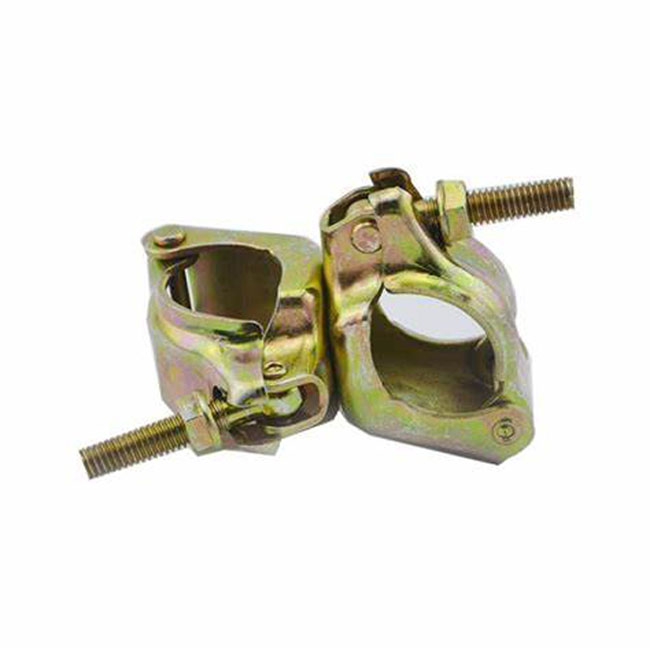
1. Scaffolding Swivel Clamp
This type of coupler allows scaffold tubes to be connected at variable angles. It is ideal for diagonal bracing or when angled connections are needed to accommodate complex scaffold designs.
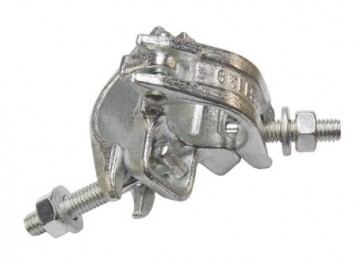
2. Scaffolding Double Clamp (Right Angle Coupler)
Used to securely connect two scaffold tubes at right angles, typically between parallel horizontal and vertical members. It enhances the overall stability and rigidity of the scaffolding system.
3. Scaffolding Half Coupler
A half coupler is designed for situations where only a partial connection is needed. It can be used to fix a single tube to another at a specific angle, making it suitable for temporary or lightweight connections.
4. Scaffolding Putlog Coupler
This coupler connects putlogs—horizontal tubes that support working platforms—to the vertical scaffold standards. It plays a crucial role in forming safe and stable work platforms.
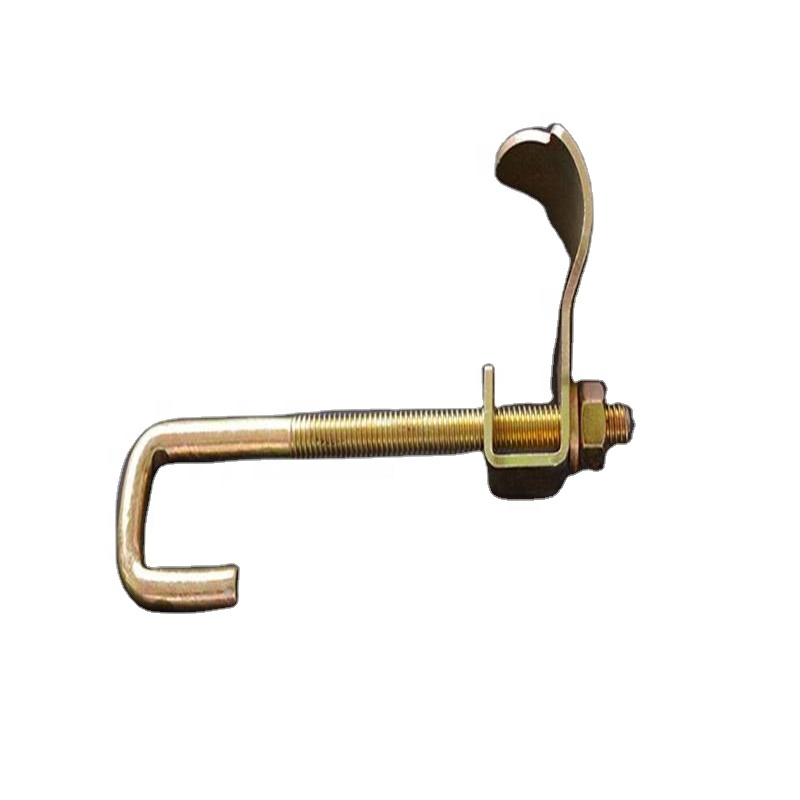
5. Scaffold Girder Clamp
Girder clamps are heavy-duty fittings used to secure scaffold structures to steel beams or girders. They provide a reliable connection point for load-bearing horizontal elements.
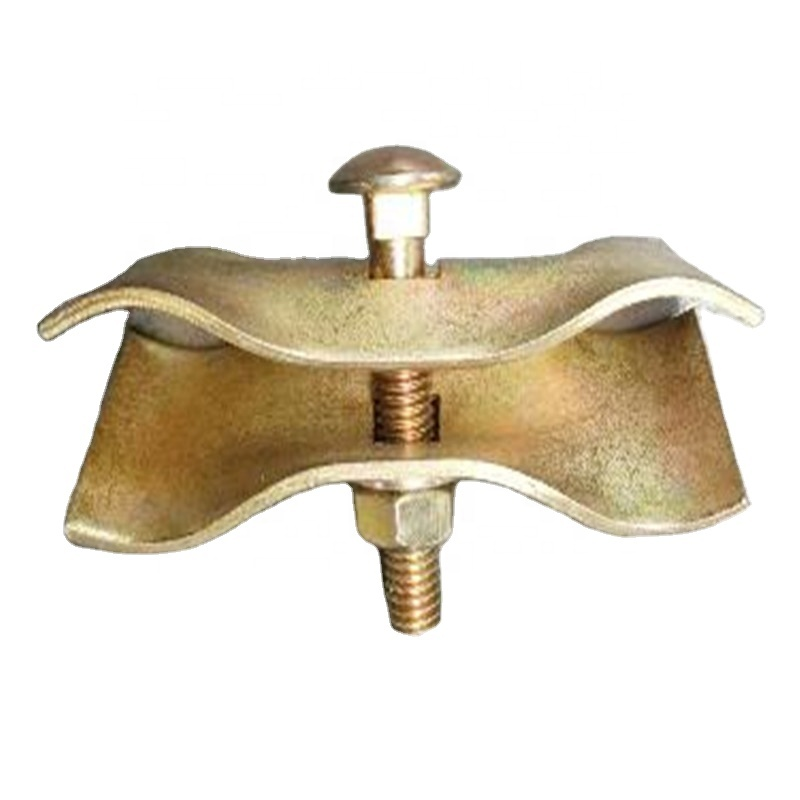
6. Scaffolding Joint Clamp
Joint clamps are used at intersections or joints to connect scaffold tubes firmly, ensuring continuity in structural strength across the scaffolding network.
Each type of scaffolding clamp and coupler plays a vital role in adapting the scaffolding to different construction needs. These fittings are typically made from forged or cast steel and treated with galvanized or painted finishes for corrosion resistance and durability.
FAQ About Scaffolding Clamps and Couplers
Q1: What are scaffolding clamps and couplers used for?
A: Scaffolding clamps and couplers are used to securely connect scaffold tubes in various configurations. They are essential for building safe, stable, and adjustable scaffolding structures on construction sites.
Q2: What types of scaffolding clamps are available?
A: Common types include swivel clamps, double couplers, half couplers, putlog couplers, girder clamps, and joint clamps. Each type serves a specific purpose, such as forming right-angle connections, diagonal bracing, or attaching to structural beams.
Q3: What materials are scaffold couplers made from?
A: Most scaffolding couplers are made from high-strength forged steel, cast iron, or aluminum. They are often treated with hot-dip galvanizing, electro-galvanizing, or painting to improve corrosion resistance.
Q4: Are your clamps compliant with international standards?
A: Yes, our scaffolding clamps are manufactured in compliance with standards such as EN74, BS1139, and JIS, ensuring safety, performance, and compatibility with global scaffolding systems.
Q5: Can scaffolding clamps be reused?
A: Absolutely. High-quality clamps are designed for multiple uses. With proper handling and storage, they can be reused across many projects without compromising performance or safety.
Q6: Do you offer customized packaging or OEM branding?
A: Yes, we support OEM services including custom packaging, logos, and product markings according to your specifications.
Q7: How can I ensure proper installation of scaffold couplers?
A: It is important to follow manufacturer guidelines and use the correct torque when tightening bolts. Regular inspection during installation and use is also crucial to ensure safety.