How to Choose the Right Anti Corrosion Steel Pipe for Urban Water Supply and Drainage
2026-09-09
How to Choose the Right Anti Corrosion Steel Pipe for Urban Water Supply and Drainage
In urban water supply and drainage projects, steel pipes are exposed to different water, soil, and operating conditions. Choosing the right anti corrosion steel pipe is essential for extending pipeline service life, reducing maintenance costs, and ensuring reliable operation.
So, what factors should be considered when selecting anti corrosion steel pipe for municipal water supply and drainage projects?
How Does the Usage Environment Affect Steel Pipe Selection?
The operating environment directly affects the corrosion risk and service life of steel pipes.
What Should You Consider About Water Quality?
The type of water being transported should be considered first. Urban domestic water is generally less corrosive, while industrial wastewater and seawater may contain higher concentrations of chloride ions and other corrosive substances.
For relatively mild conditions, a standard anti corrosion steel pipe with a suitable protective coating may be sufficient. More aggressive environments may require a corrosion resistant steel pipe with enhanced coating or lining protection.
How Do Soil and Temperature Affect Pipelines?
For underground pipelines, acidic, saline, or highly humid soil can accelerate external corrosion. In such environments, an appropriate anti corrosion coating for steel pipe should be selected, and additional protection measures may be required for particularly demanding projects.
Temperature should also be considered. High temperatures can accelerate coating aging, while extremely cold conditions may affect material performance. The pipe and coating system should therefore match the local climate and operating temperature.
What Anti-corrosion Protection Should You Consider for Steel Pipes?
Corrosion protection is one of the most important factors when selecting an anti corrosion steel pipe for water supply and drainage applications.
Which Anti-corrosion Coating Should You Choose?
Common protective systems include epoxy, polyethylene, and polyurethane coatings. They offer different levels of corrosion resistance, impact resistance, abrasion resistance, and flexibility.
Epoxy coatings can provide practical protection for general applications, while polyethylene-based systems may be more suitable for environments requiring stronger resistance to corrosion, impact, or abrasion. The appropriate coating should be selected according to the water quality, soil conditions, temperature, expected service life, and project requirements.
Why Are Corrosion Tests Important?
Project owners should review the manufacturer's technical documentation and relevant test reports. Depending on project requirements, testing may cover coating adhesion, immersion resistance, salt spray resistance, and other performance indicators.
These tests can help verify whether the selected corrosion resistant steel pipe and its protective system are suitable for the intended application.
What Steel Pipe Quality Factors Should You Consider?
Corrosion protection is only one part of overall pipe quality. Material, dimensions, manufacturing process, and quality control should also be evaluated when choosing an anti corrosion steel pipe.
Which Steel Material Is Suitable?
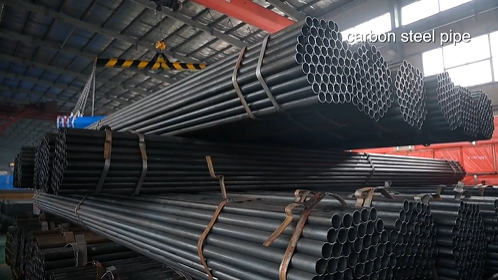
Carbon steel is widely used in water supply and drainage projects because of its strength, availability, and relatively competitive cost. Stainless steel and alloy steel can offer higher corrosion resistance but may involve higher material costs.
The appropriate material should be selected according to design pressure, temperature, water characteristics, and project budget.
How Do Steel Pipe Specifications and Dimensions Matter?
Correct steel pipe specifications and dimensions are important for achieving the required flow capacity and pressure performance.
Pipe diameter and wall thickness should be determined according to the design requirements. Dimensional accuracy is also important for installation, connection, and sealing performance.
How Does Manufacturing Quality Affect Performance?
Reliable manufacturing processes and strict quality control help ensure consistent pipe strength, weld quality, dimensions, and coating performance.